Without the details
I imagine a teacher, we’ll call her Martha Romero, a third-year middle school language arts teacher, listening that day to Morning Edition on the way to school. She wonders if she could adopt Mary Sojourner’s “without the details” for her troubled first-period class.
Her students arrive––most of them anyway, a few late. Setting aside her prepared lesson, she pulls her chair to the side of the room. She asks, “What makes for community?”
After a brief pause, Jennifer tentatively raises her hand. “I think community is where people come to know and respect one another.”
James sits up and speaks. “People have to act to have true community.”
José, recently from Jalisco, Mexico, raises his hand. “Community is family. When we all get together––parents, siblings, cousins, aunts, uncles, grandparents, and some close friends––we are a community.”
The conversation continued for nearly fifteen minutes without Ms Romero commenting. She began her class “without the details” of a lesson plan except for the one question. She was hoping to open her students’ thinking––and her own. It took on a life of its own. By the end of the period, she felt lighter and more connected to her troubled first-period class. And perhaps they felt more connected to each other––and to her.
Taking Sojourner’s wisdom to heart, this young teacher invited her students to consider their thoughts without “passionate conjecture,” or “idle hypotheses.” Her what-makes-for-community question pushed her thinking about how she might offer similar questions. Perhaps, she thought, request writings that do not regurgitate, such as a plot summary or a description of the main characters. She could ask, Whose story is it? Who do you relate to the most? What would you want to tell someone about it? Imagine the conversations that will follow she thought.
Teachers can choose to open students to discuss, argue, contemplate, and challenging them to construct their understandings. Shouldn’t “without the details” be a fundamental practice in all our lives?
“Life can only be understood backwards; but it must be lived forward” (Kierkegaard)
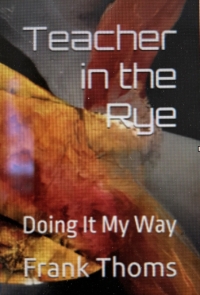
I write to bring ideas and methods from my life as a teacher in the latter half of the 20th century to help teachers and the public to “live forward” in this century. My latest book, Teacher in the Rye: Doing It My Way is available on Amazon. All my publications can be found at frankthoms.com. And I welcome comments here on my Substack or by email at frankthoms3@gmail.com.