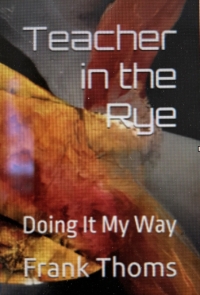
If you have taught––or survived school: You'll recognize yourself in my new memoir, "Teacher in the Rye: Doing It My Way"
A good classroom builds on conversations. It does not serve as a listening lab of students sitting at their desks. Reflecting on my career from 1962 to 1999, Teacher in the Rye: Doing It My Way offers ideas, methods, and incentives to teachers to be open to creative and imaginative ways to inspire students.
Once teachers sense the power and pleasure of being themselves, learning becomes central for everyone including the teacher herself. And classrooms with no electronic devices may be the last best hope for engaging face-to-face learning in today’s digitally driven culture. Learning together, a human treasure we cannot afford to lose.
Having had two publishers, I decided to produce Teacher in the Rye on Amazon’s Kindle as a paperback and Kindle reader. These Substack posts draw from the book and other writings I’ve done.
“Life can only be understood backwards; but it must be lived forward” (Kierkegaard),
I write to bring ideas and methods from my life as a teacher in the latter half of the 20th century to help teachers and the public to “live forward” in this century. “Teacher in the Rye” is now available on Amazon. And I welcome comments here on my Blog or by email at frankthoms3@gmail.com.