What is an Ideal doorman?
Jervis’s words seemed almost too simple, yet their simplicity defied their value. His idea began to stick. “Come to think of it,” said one teacher, “I know the end of my lesson plan before I begin to write it. Why not the end of my unit? And why not my expectations for the year?”
Had we been at the conference after Fred Jervis asked, “What is an ideal doorman?” how would we have responded? We might have been perplexed, shaking our heads, pondering, wondering. Upon reflection, we might have begun to see his question helping us understand that we need to define the direction we should take our students––and why. We might ponder, What is an ideal lesson? An ideal unit? An ideal school year? Jervis lets us know that we need to consider ends-in-view.
As teachers, we may be in a department that advocates delivering the textbook’s content in a prescribed manner mapping out the pages to be covered for the week. And the requirement to design tests and exams together. But we might ask ourselves: What might happen were we to bring the implications of Jervis’s question on these practices at a department meeting?
~ ~ ~
Extending Jervis’s profound question further, as a teacher you could choose to stand at the door of your classroom and envision your incoming students leaving one-hundred-eighty days later on their last day. You ask yourself,
- Who have they become, having been with me for a year?
- What will they take with them that’s special?
- What will they care about?
- What values will they carry from this class?
- How will they have related to each other?
- To the world?
- And, what differences have I made?
Such questions align priorities and provide a mindset to teach with a long view. Beyond curricular expectations, teaching is first about students, your clientele, who they are, who they are becoming. You have been hired to pay attention to academics, tests scores, and grades. But ultimately your end-in-view should be about nurturing kindness, caring, self-respect, self-confidence, excellence, curiosity, respect for others, cooperation, and love for oneself and others.
What greater rationale could you have for being a teacher?
“Life can only be understood backwards; but it must be lived forward” (Kierkegaard)
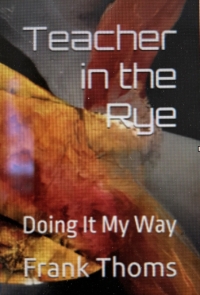
I write to bring ideas and methods from my life as a teacher in the latter half of the 20th century to help teachers and the public to “live forward” in this century. My latest book, Teacher in the Rye: Doing It My Way is available on Amazon. And I welcome comments here on my Substack or by email at frankthoms3@gmail.com.