Schools must recruit every student
Robert Kegan in his seminal work, The Evolving Self, introduces the concept of “recruitability.” He writes that hardly anyone can resist a baby’s eyes despite the large head, huge forehead, and little body; nature provides them with the natural gift of recruiting. On the other hand, nature is not so kind later on. As people grow older they do not have equal abilities to recruit. Adolescents are a case in point. Some are more ‘attractive’ than others. Some naturally invite people into their lives while others push people away. And a few slip into the woodwork. Concerning schools,
[T]he greatest inequalities in education are not between schools…but within them; that greater than the inequalities of social class or achievement test scores is the unequal capacity of students to interest others in them––a phenomenon not reducible to social class or intelligence, and which seems to be the more powerful determinant of future thriving (p 55ff).
Kegan goes on to advocate––something I felt from my gut from my first day in the classroom––that teachers need to be recruiters, and to be recruitable themselves. They need to be open to all students, not only to those who lure them into their web but to those who fail to reach out. Schools must ensure that each and every student is recruited, that each one is held by at least one staff person who the student knows and cares for. All students deserve to belong.
When every student feels they belong, the school and its teachers are fulfilling their mission. Everyone welcomed, everyone seen. In my book, Conversation Classrooms: A Profound Shift from Delivery of Information to Partnership, 2nd edition (Roman & Littlefield, 2024) I elaborate on this idea in a lively conversation between two teachers.
I conclude with an account of former principal Brian Flanagan of Somersworth High School, NH, who with his vice principal, Carl Fitzgerald, “recruited” (ate lunch with) all students who were not members of clubs or teams. Every student in his school was ‘recruited.’ They knew that they belonged.
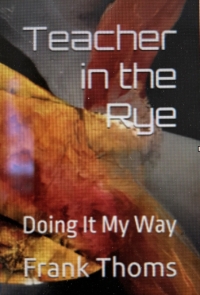
Given that “Life can only be understood backwards; but it must be lived forward” (Kierkegaard), I write to bring ideas and methods from my life as a teacher in the latter half of the 20th century to help teachers and the public to “live forward” in this century. My latest book, “Teacher in the Rye” is now available on Amazon. And I welcome comments here on my Blog or by email at frankthoms3@gmail.com.